
Rooftop mechanical equipment is critical to a building’s basic functionality – from air handling units to exhaust fans, ducts, pipes and specialized equipment. While the performance of these system components varies, one requirement is non-negotiable: they must remain secure and operational under severe environmental forces like high winds and seismic activity.
Across the United States, building codes and engineering standards require rooftop equipment – and the roof curbs and equipment supports beneath them – to be designed to withstand these forces. For engineers, contractors, and building owners, understanding these requirements is essential to ensuring safety, compliance, and long-term performance.
Below we will break down the key seismic and wind requirements affecting rooftop equipment, the organizations that define them, and how products from The Pate Company are designed to help meet these demands.
Wind loads
Wind is often the governing design force for rooftop equipment, particularly in coastal and hurricane-prone regions. High winds can create dangerous conditions, including uplift forces that can pull equipment off the roof, lateral forces that can shift or slide equipment, and vibration that causes fatigue over time. Wind ratings or certification vary based on many factors, such as:
• Geographic location (coastal vs. inland)
• Building height
• Roof exposure category
• Local wind speed maps (part of ASCE 7)
In extreme cases, improperly secured equipment can become airborne, posing serious safety risks and causing major structural damage.
Seismic loads
Seismic forces generated by ground motion during earthquakes can quickly damage rooftop equipment, especially if it is not properly anchored to the building structure. Seismic activity can result in severe vibration, lateral shaking forces, and vertical movement. Unlike a single gust wind, an earthquake causes repeated acceleration in multiple directions, often forcing equipment to rock, bounce and walk across – or off of – the roof.
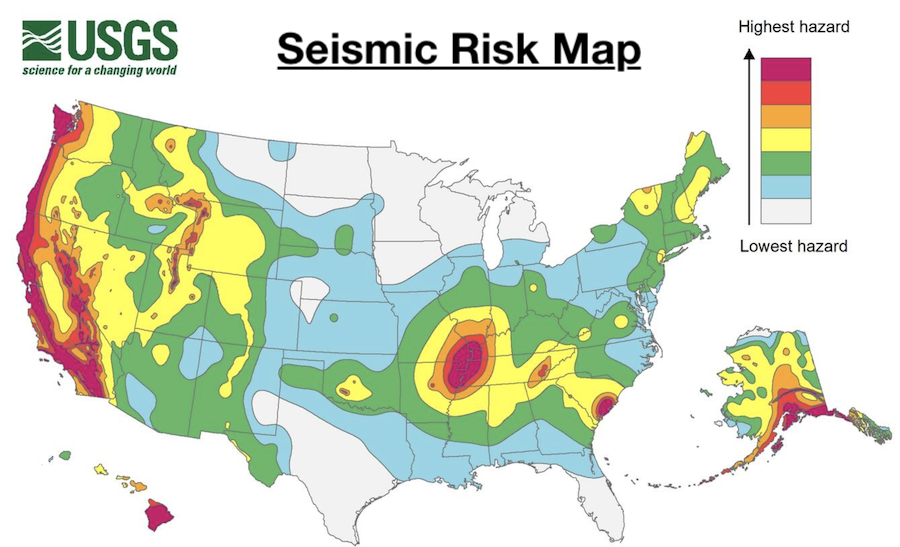
Seismic requirements are typically set by a building’s Seismic Design Category (SDC), which assesses risk based on several considerations:
• USGS (U.S. Geological Survey) seismic hazard map
• Occupancy category (hospital, school, office building, etc.)
• Soil conditions
• Equipment weight and anchorage
Meeting applicable seismic requirements helps ensure that rooftop equipment remains anchored during an earthquake, minimizing the risk of it detaching, tipping, or collapsing – protecting both occupants and critical building functions.
The Codes and Organizations Behind the Requirements
Several key organizations establish the standards and codes governing seismic and wind design for rooftop equipment. Understanding their roles helps clarify how requirements are developed and enforced.
ASCE (American Society of Civil Engineers)
The ASCE 7 standard – currently ASCE 7-22 – is the backbone of structural load design in the U.S. It provides:
• Wind load maps and calculation methods
• Seismic design parameters and formulas
• Criteria for nonstructural components, including rooftop equipment
IBC adopts ASCE 7 by reference, making it the technical foundation for both wind and seismic requirements.
International Code Council (ICC)
The International Code Council (ICC) develops the International Building Code (IBC), which is adopted (with local amendments) across most U.S. jurisdictions. For rooftop equipment, the IBC is the primary enforceable code, which includes the following:
• Defines minimum design requirements
• References other standards (primarily ASCE 7) for detailed calculations
• Includes provisions for mechanical equipment anchorage and support
AMCA (Air Movement and Control Association)
AMCA 550 is the industry standard for seismic restraint testing of mechanical equipment. It defines how equipment and supports are tested under simulated seismic conditions, and provides certification that systems can withstand specified loads. For rooftop equipment supports, AMCA certification is often required or strongly preferred.
SMACNA (Sheet Metal and Air Conditioning Contractors’ National Association)
While not a code body, SMACNA guidance is widely used in design and installation. It publishes guidelines and best practices for HVAC system installation, equipment support and restraint, and seismic bracing recommendations.
Local Authorities Having Jurisdiction (AHJ)
Ultimately, enforcement comes from the local building authority, which may:
• Adopt specific code editions (such as IBC 2021, 2024, etc.)
• Add regional requirements (for example, higher wind speeds in coastal areas)
• Require additional documentation and/or testing
What the Codes Actually Cover
While the details vary by project and location, several core requirements apply broadly:
1. Anchorage and attachment
Rooftop equipment must be securely anchored to resist wind uplift and lateral forces, as well as seismic acceleration. This requires proper fasteners, structural attachment to the building, and verified load paths.
2. Load path continuity
Forces must be transferred safely, from equipment, to the curb or support, to the roof structure, to the building frame. Any weak link in this chain can lead to failure.
3. Equipment weight and importance
Heavier equipment and critical systems (such as hospitals, data centers, etc.) may require higher design factors, enhanced anchorage, and more stringent testing.
4. Wind design considerations
Wind design includes resistance to uplift, sliding and overturning. Higher requirements apply in coastal regions, hurricane-prone zones and high-rise buildings.
5. Seismic design considerations
Seismic requirements depend on the building’s Seismic Design Category (SDC), determined by ASCE 7. In higher categories, equipment supports must be engineered to resist significant dynamic forces. Categories include:
• SDC A-B: Minimal requirements
• SDC C-D: Moderate restraint required
• SDC E-F: Strict anchorage and testing required
Why this Should Matter to Everyone
Even for locations that don’t typically experience significant seismic or wind events, these events are possible in the vast majority of the United States. As a result, engineers, contractors and building owners all share the responsibility or protecting property and human life – particularly, but not limited to, critical facilities and essential operations. Failure to meet wind and seismic requirements can lead to:
• Personal injury and death
• Equipment damage or loss
• Roof system failure
• Water intrusion
• Business interruption
• Code violations and liability
How Pate Can Help You Meet Code Requirements
At The Pate Company, we design our roof curbs and equipment support systems with real-world seismic and wind demands in mind. We offer professional engineering services that can meet any project’s specialized needs for seismic and/or wind rating certifications. Our experienced engineering team will ensure that your project complies with local building codes and safety standards, based on your individual location and building type.
We also offer load modeling services that provide the essential calculations needed to determine the capacity and structural integrity of our products under various load conditions. In addition, as a custom manufacturer, we can build extra features and/or heavy-duty materials into any of our roof curbs or equipment support products – providing durability and reliability, even when exposed to extreme environmental conditions.
Whatever the project, Pate engineers will deliver reliable models and certifications that not only assure the product’s performance, but also its compliance with national and local codes.
Final Thoughts
Seismic and wind requirements for rooftop equipment are not just regulatory hurdles – they are essential safeguards that protect buildings, occupants, and critical systems. While the codes and standards (IBC, ASCE 7, AMCA, and others) provide the framework, successful compliance depends on selecting the right products from the right manufacturer.
At The Pate company, we take these safety considerations very seriously, and build all of our roof curbs and equipment supports with these challenges in mind. So when you work with us, you can rest assured that your projects will meet code requirements, and also deliver reliable, long-term performance.